Why it exists
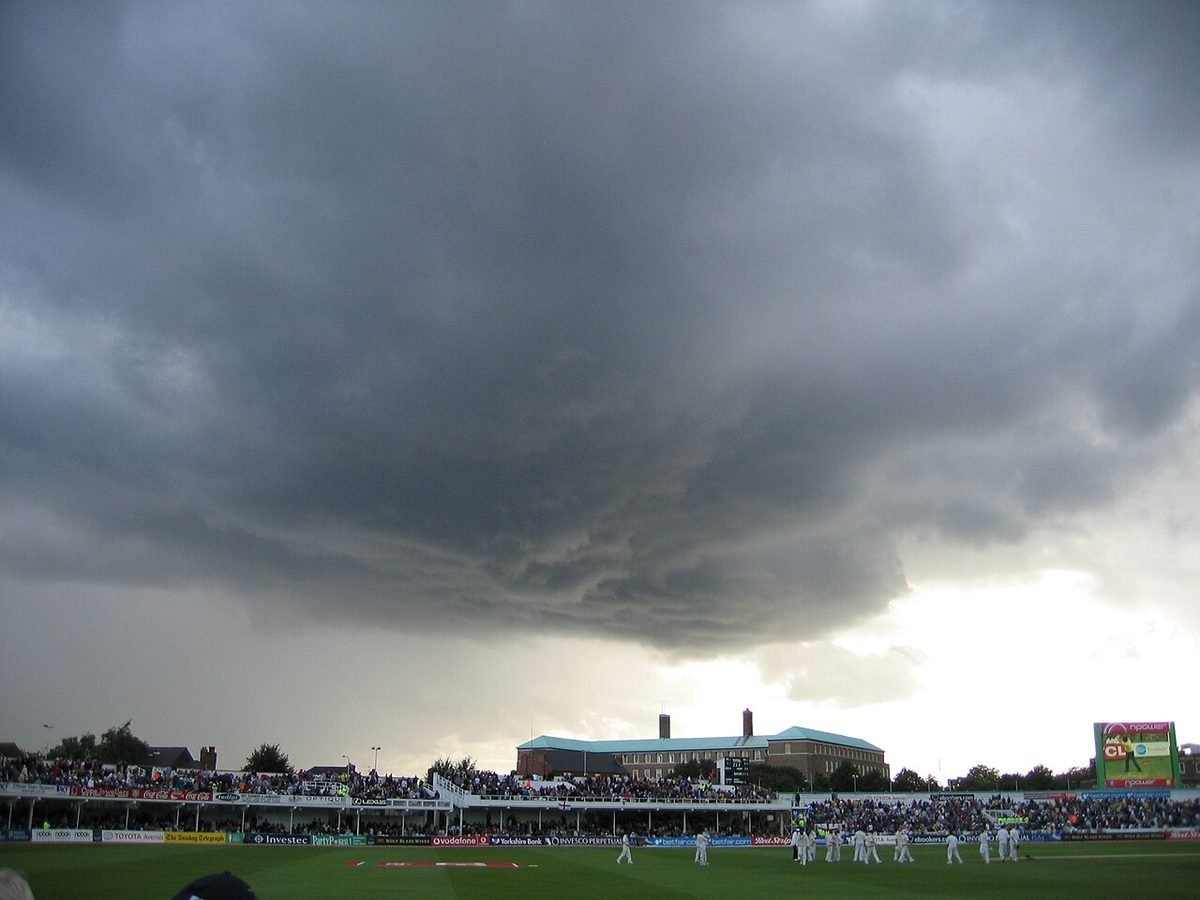
Rain steals overs. Without DLS, the team batting second in a shortened game would have an unfair advantage (fewer overs to chase the same target) or disadvantage. DLS converts "overs lost" into a fair revised target using the concept of resources.
Resources in one paragraph
Every team starts with 100% resources (50 overs, 10 wickets in an ODI). As overs are used and wickets fall, resources drain. DLS tables map every combination — e.g. 20 overs left with 8 wickets in hand ≈ 52% resources remaining. The revised target keeps the ratio of resources fair between the two innings.
What "resources" really means
Think of it as two fuel tanks: overs and wickets. You need both to score runs — 10 overs with 2 wickets left is worth far less than 10 overs with 8 wickets left, because batters have to protect their wickets instead of swinging.
The DLS table has a row for every over remaining (50 down to 1) and a column for every wicket lost (0 to 9). Here's a simplified taste of how it looks:
| Overs left | 0 wkts lost | 3 wkts lost | 6 wkts lost |
|---|---|---|---|
| 40 | ~90% | ~75% | ~50% |
| 20 | ~60% | ~50% | ~32% |
| 10 | ~35% | ~30% | ~20% |
| 5 | ~19% | ~17% | ~12% |
Illustrative values — the real table is far more granular. The pattern is what matters: wickets lost drain resources nearly as fast as overs used.
Worked example (simplified)
- Team A scores 250 in 50 overs (used 100% resources).
- Rain cuts Team B's innings to 30 overs. Team B has ~75% resources (fewer overs, all wickets).
- DLS target ≈ 250 × (75/100) + 1 = 189 to win (illustrative — real tables are finer-grained).
The "+1" is because Team B must exceed the par score to win; matching it is a tie.
Second example: when wickets change everything
Same Team A: 250 in 50 overs. But this time rain arrives during Team B's innings — they're 120/6 after 25 overs when play stops for good.
Now DLS doesn't just shrink the overs; it looks at where Team B was. With 6 wickets down, their remaining resources were thin — the par score for 25 overs with 4 wickets in hand is much lower than people expect. If DLS par at the stoppage was, say, 130, Team B loses by 10 runs on DLS — even though "120/6 chasing 250" looks like a team still in the fight. Wickets are resources, and 6 down means the tank was nearly empty.
This is the moment that breaks hearts: a team cruising at 120/1 would win the same rain call comfortably. The scoreboard doesn't tell the story — the resources do.
DLS vs the old rain rule
Before DLS (and its predecessor, plain Duckworth-Lewis), rain rules were crude — the infamous 1992 World Cup semi-final, where South Africa needed 22 off 13 balls and rain left them needing 22 off 1 ball, is why the system exists. DLS (the Stern revision, 2014) handles modern high-scoring games better.
Famous DLS games
- 2015 World Cup semi-final, Auckland: rain cut New Zealand's chase against South Africa to 43 overs, target 298. Grant Elliott's six off Dale Steyn with a ball to spare sent New Zealand to their first final — a DLS chase done perfectly, wickets in hand when it mattered.
- countless group games: the real DLS drama is usually quieter — a team 10 runs "behind par" when rain arrives, players sprinting off while the analysts do frantic maths on live TV.
I still remember a club game where we were "ahead on DLS" for exactly four balls before the rain came — four balls earlier or later and we'd have lost. That's the cruelty and beauty of it: the par score is always there, ticking, whether you're watching it or not.
Minimum overs for a result
No result is declared until each side has had a minimum chance:
| Format | Minimum overs per side |
|---|---|
| ODI | 20 |
| T20I | 5 |
| The Hundred | 25 balls |
Below that, it's a no-result — 1 point each in a tournament, and NRR ignores the game entirely.
Criticisms (it's not perfect)
DLS has its doubters, and some complaints are fair:
- It can favour the chasing side in certain rain patterns — teams have learned to keep wickets in hand and "stay ahead of par," turning DLS into a tactic rather than a lottery.
- The table is a model, not magic. It assumes average scoring patterns; in an era of 200+ T20 chases, some argue the Stern revision still undervalues late-overs firepower.
- Complexity kills trust. When even professional cricketers admit they don't fully understand it, fans default to assuming they've been robbed.
None of this has produced anything better, though. Every alternative proposed has been worse.
What happens if... (edge cases)
- Rain during the innings break: Team B's resources are simply reduced from the start — the cleanest DLS case.
- Multiple interruptions: DLS recalculates every time. Each stoppage resets the maths; the final target accounts for all of them.
- Rain with 1 ball left: if the minimum overs are done, DLS decides it on par score — matches have been won and lost on a single ball's difference from par.
- Tie on DLS par: it's a tie. (Knockouts then go to a super over.)
October relevance
The tri-series is played in October — Rawalpindi and Lahore are usually dry then, but one washed-out game brings DLS (and NRR) into sharp focus on the points table.
Keep reading: NRR explained · Super over rules · Tri-series points table · Tri-series schedule